



We are always on the lookout for solutions: enter the bio-based dye PurePalette™ made by Copenhagen-based company Octarine.
The Why
Fabric dye does not get much airtime when people talk about the impact of fashion production on our planet. It certainly deserves more attention: Many dyes in the fashion and textile industries today are derived from fossil fuels, and dying also uses one of our most precious resources: water. Dyes contaminate water with harsh chemicals and, without proper cleaning, harm ecosystems and freshwater ways when released.
Dying processes also use a lot of energy. According to a report from the World Resources Institute, tier 2 (the dyeing stage) accounts for over half the greenhouse gas emissions in the fashion supply chain. While natural dyes (mostly derived from plants) offer a gentler alternative, they don’t offer a perfect solution: their colour palette is limited to soft pinks, yellows, purples, and blues, and they pose issues with colour fastness.
PurePalette™, by Copenhagen-based company Octarine, offers an extensive and vibrant palette derived from nature. It replaces conventional synthetic dyes while eliminating harmful chemicals and reducing water and energy usage.
The Process
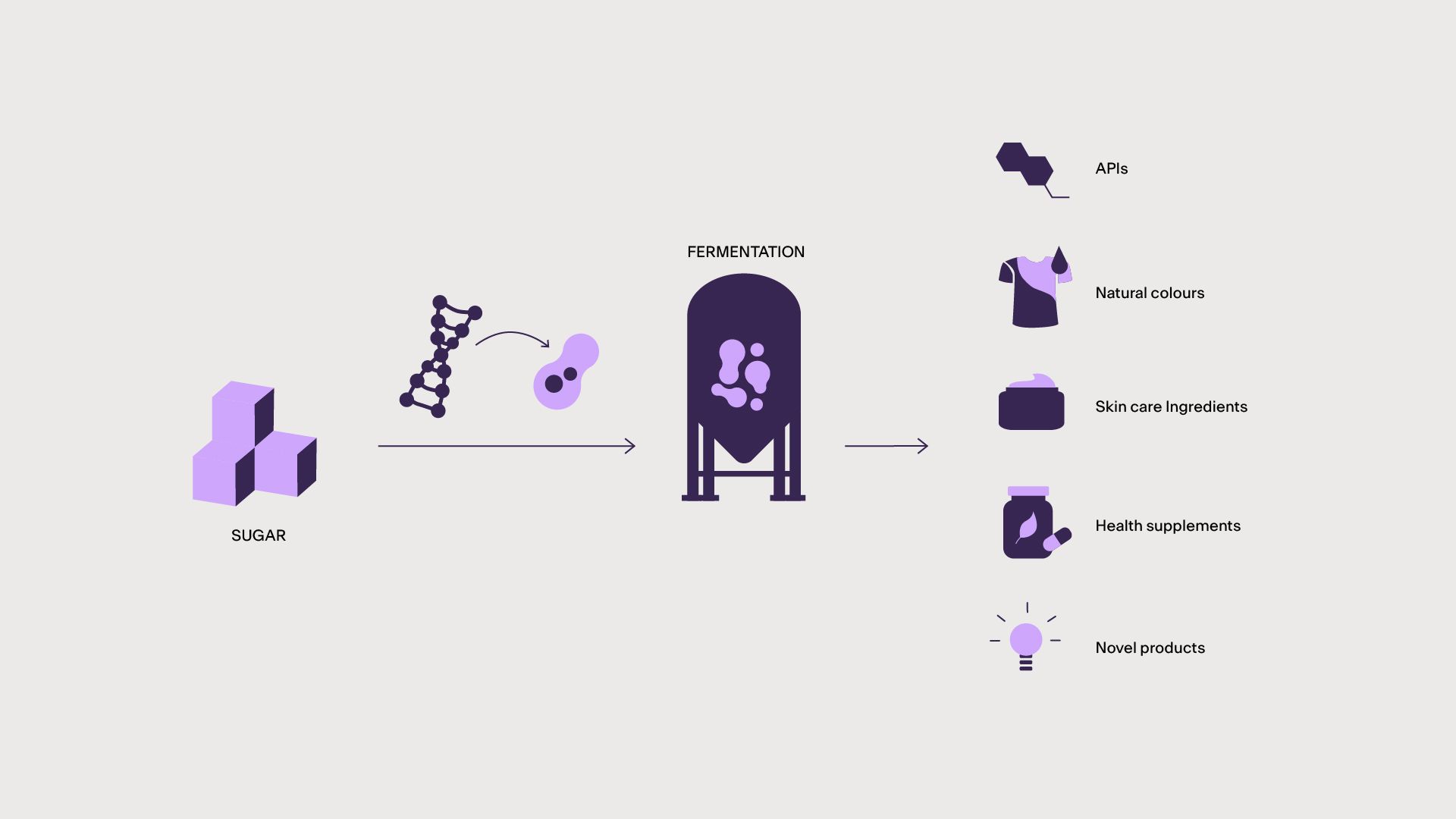
Octarine’s technology uses synthetic biology to replicate a natural microorganism that produces colour. This is done using two technologies: cell factory engineering and precision fermentation (using yeast and sugar), alongside enzymatic enhancement that modifies the natural ingredients. Through this process, they design custom microbes to produce a wide array of bio-based ingredients like textile dyes.
The process is efficient. It uses only renewable resources, fabrics can be dyed at lower temperatures, and the dye is absorbed faster, requiring less dye to create a strong colour. Octarine’s reports from early testing are exciting: compared to conventional dyes, PurePalette™ uses 61.5% less water, 61.5% less energy and releases 69.5% less carbon dioxide. They are also proven to be less toxic to humans and ecosystems.
The Results
It’s not just better for the environment, PurePalette™ is better for our clothes too. It works across a range of fibres and blends – and particularly well with TENCEL™ Lyocell and modal branded fibers. “Because of how TENCEL™ fibres are produced, they have a good ‘uniformity’ so we see a very even, quick and durable dye uptake,” says Julie Verdich, the Director of Partnerships and Product Development.
PurePalette™ shares our desire for fashion and textiles derived from renewable resources and our love of innovation. “Lenzing shares knowledge when working with innovation and new technologies,” says Verdich. “[We wanted to work with them because] they are willing to try out new things, which is not common in the textile industry.”